
Lobe pumps are positive-displacement pumps used in food processing, pharmaceutical manufacturing, chemical processing, cosmetics, and other industries. They transfer fluids using rotating lobes that create expanding cavities, carry fluid through the casing, and displace it at the discharge outlet. Businesses looking for reliable fluid-handling solutions can explore our lobe pump manufacturing and supply solutions.
Understanding the lobe pump working principle involves rotor synchronization, cavity expansion at suction, fluid transport, and discharge displacement. Pump performance depends on internal clearances, fluid viscosity, rotational speed, differential pressure, and suction conditions. To understand the key differences in design, performance, and applications, read our guide to lobe vs. twin screw pumps.
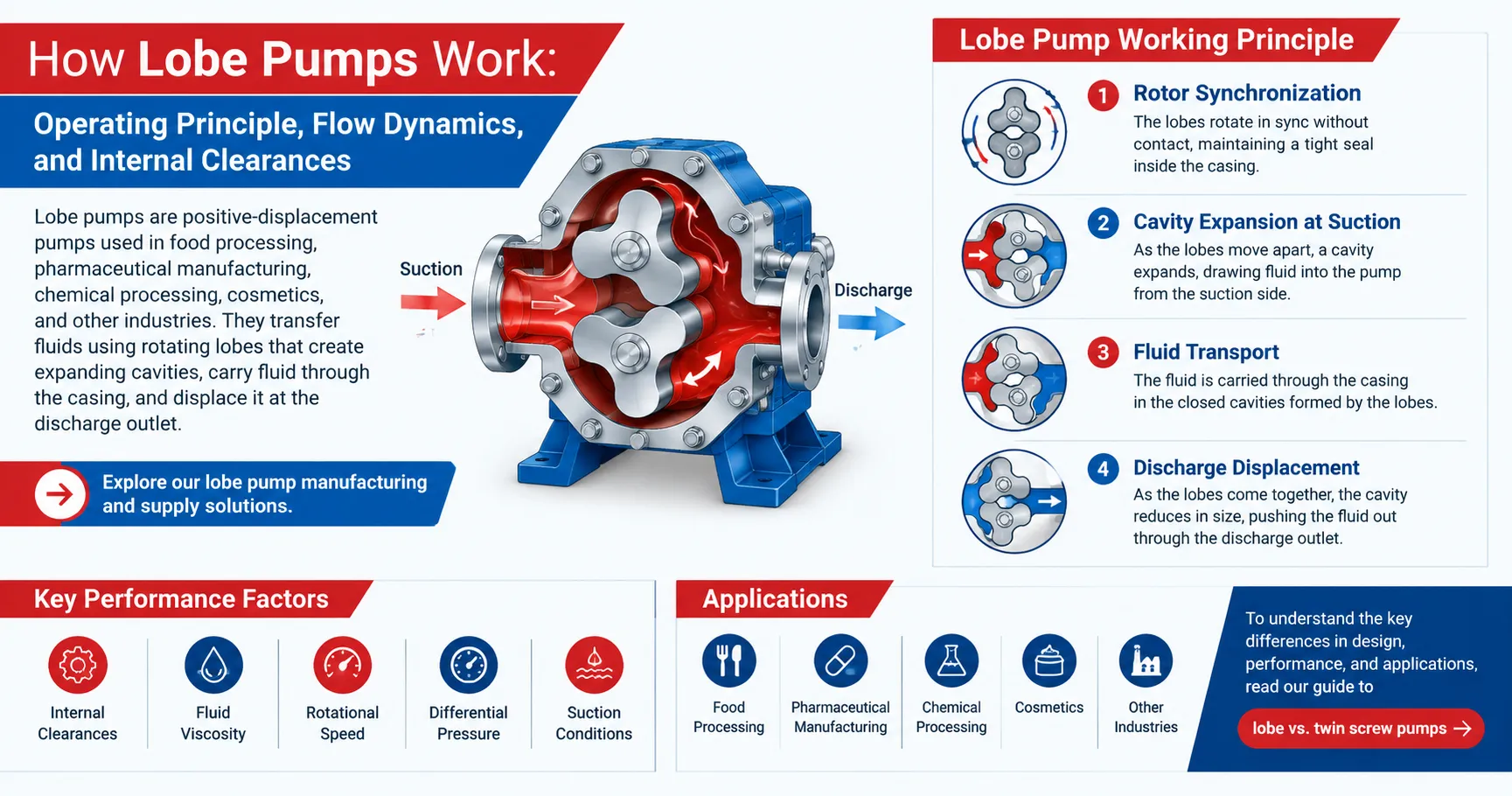
Lobe Pump Working Principle: A Step-by-Step Breakdown
A typical lobe pump contains two rotating lobed rotors inside a casing. In an externally timed design, timing gears synchronize the rotors so their lobes pass each other without contact under normal operating conditions.
Step 1: Rotor Timing and SynchronizationThe drive shaft rotates one rotor while timing gears synchronize the second. Correct timing maintains the required gap between the lobes, prevents mechanical contact, and supports consistent fluid displacement.
Step 2: Cavity Expansion at the Suction InletAs the lobes rotate, cavities expand on the suction side, allowing fluid to enter due to a pressure difference. Fluid viscosity, temperature, inlet pressure, and suction-line restrictions influence how effectively the cavities fill.
Step 3: Trapping and Transporting Fluid Around the CasingThe rotating lobes carry fluid in spaces between the lobes and casing towards the discharge. This movement transfers fluid without an intentional compression cycle. Some fluid may leak backwards through internal clearances, reducing actual flow.
Step 4: Fluid Displacement at DischargeAs the cavities connect with the discharge port, the rotating lobes displace fluid into the outlet pipeline. The cycle repeats with every rotation, while the pump develops the pressure required to overcome downstream resistance.
| Operating stage | Function |
|---|---|
| Rotor synchronization | Maintains correct rotor alignment |
| Cavity expansion | Allows fluid to enter |
| Fluid transport | Carries fluid through the casing |
| Discharge displacement | Delivers fluid to the outlet |
Non-Contact Rotor Timing: How Lobe Pump Rotors Operate
How Timing Gears Synchronize the RotorsIn a typical externally timed lobe pump, external timing gears maintain the relative position of the two rotors. This allows the lobes to rotate without touching each other during normal operation.
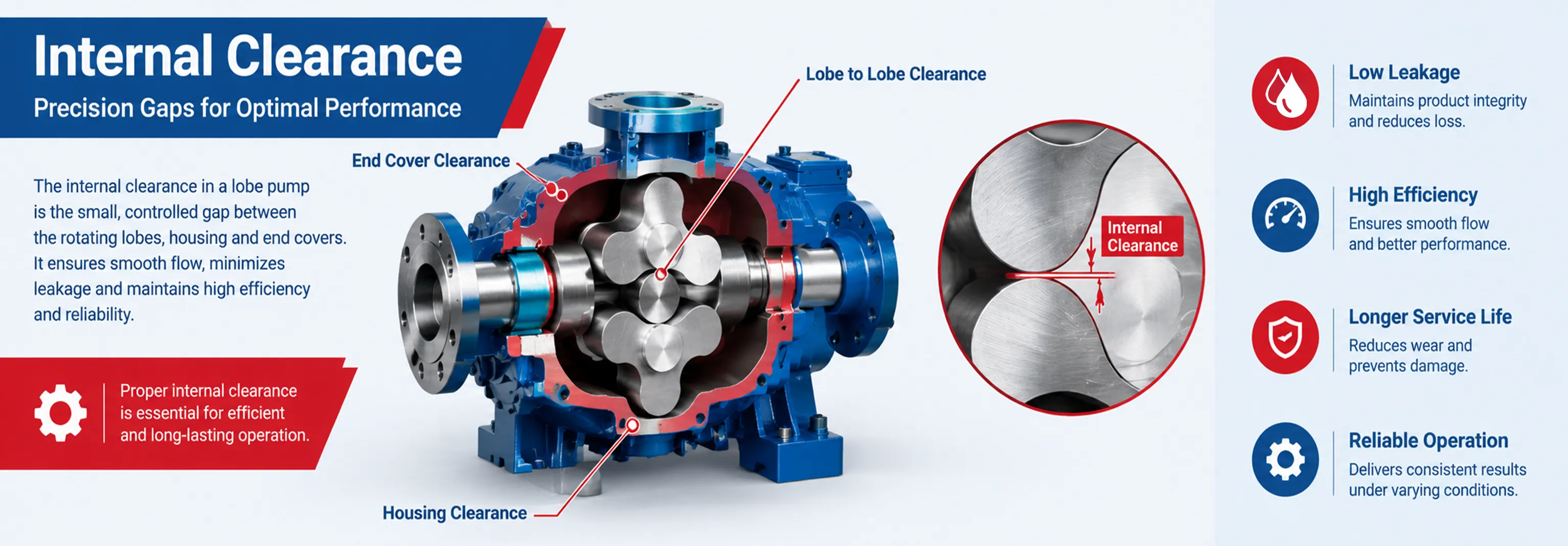
How Internal Clearances Prevent Mechanical ContactInternal clearances are small gaps between moving components and the casing. The main types include:
- Rotor-to-rotor clearance: Gap between the lobes.
- Rotor-to-casing clearance: Gap between the rotors and housing.
- Axial clearance: Gap between rotor faces and adjacent surfaces.
Incorrect timing may cause rotor contact and damage. Excessive clearances can increase internal leakage, while insufficient clearances may create contact risks as components expand or move.
| Condition | Possible effect |
|---|---|
| Incorrect rotor timing | Contact and abnormal wear |
| Excessive clearance | Increased leakage and reduced flow |
| Insufficient clearance | Mechanical contact risk |
| Damaged timing gears | Loss of synchronization |
Maintenance Rule: Clearances and timing must be checked against the pump manufacturer's specifications.
Cavity Expansion and Suction: How Fluid Enters a Lobe Pump
How Expanding Cavities Draw Fluid InAs the lobes rotate, the cavities expand on the suction side, creating space for fluid to enter. The pressure difference drives the flow, while fluid viscosity and inlet conditions determine how effectively the cavities fill.
Factors Affecting Suction PerformanceHigh-viscosity fluids may not enter the cavities quickly enough at excessive speeds, reducing actual flow.
To improve suction performance:
- Keep suction pipes correctly sized and free from restrictions.
- Inspect valves, filters, and strainers.
- Check fluid temperature and viscosity.
- Maintain suitable pump speed and inlet supply.
- Investigate air ingress or incomplete cavity filling.
Correct suction conditions help maintain consistent flow and reduce operating problems.
Fluid Displacement: How a Lobe Pump Delivers Fluid
How Trapped Fluid Reaches the Discharge OutletThe rotating lobes carry fluid around the casing in spaces formed between the rotors and housing. When these cavities connect with the discharge port, fluid is displaced into the outlet.
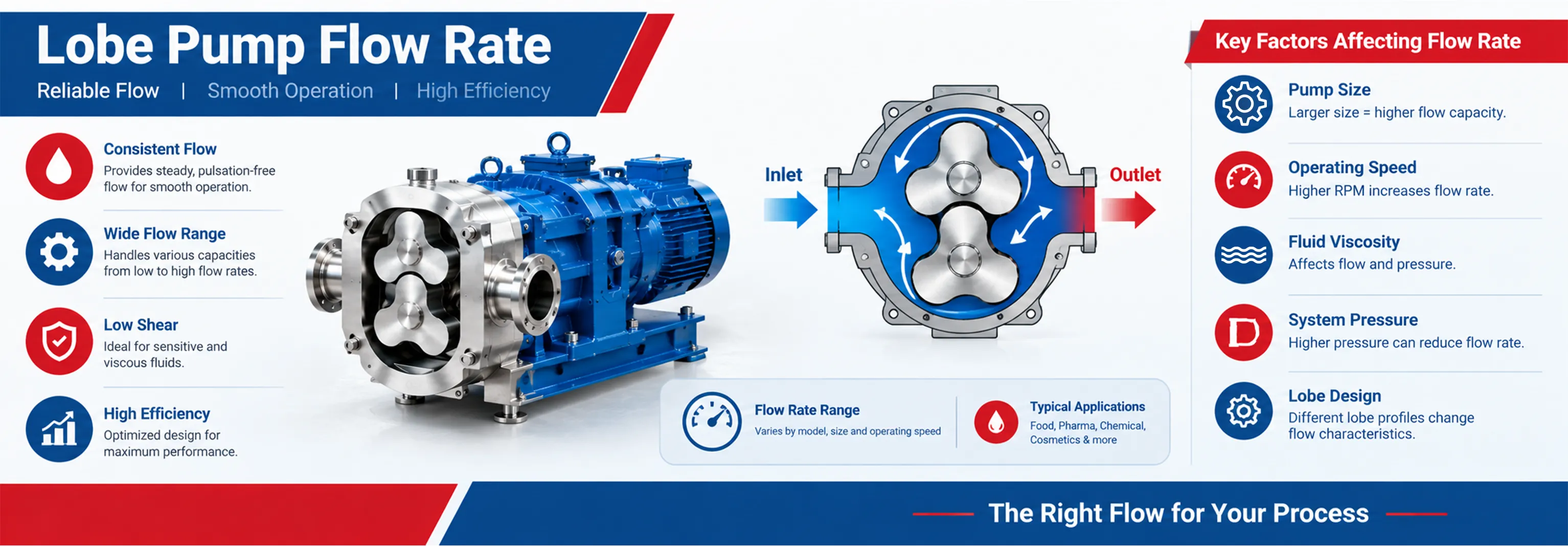
How Pressure and Internal Slip Affect FlowA lobe pump transfers fluid without an intentional compression cycle. Pressure rises because the pump moves fluid against downstream resistance. However, internal leakage can occur from the higher-pressure discharge side towards the lower-pressure suction side.
Actual flow ≈ Theoretical flow − Internal leakage and other volumetric losses
Actual flow depends on pump displacement, rotational speed, viscosity, differential pressure, suction conditions, and internal clearances. Manufacturer performance data should be used to estimate flow under actual operating conditions.
Positive-Displacement Lobe Pump Mechanics: The Role of Internal Clearances
How Clearances Affect Leakage and EfficiencyInternal clearances allow the rotors to turn safely while limiting fluid leakage. Their correct dimensions depend on the pump design, materials, temperature, pressure, and manufacturing tolerances.
| Factor | Effect on performance |
|---|---|
| Excessive clearances | Increased internal leakage and reduced flow |
| Higher differential pressure | May increase internal leakage |
| Lower fluid viscosity | May increase leakage through gaps |
| Incorrect assembly | Can cause contact, wear, or leakage |
| Correct clearances | Support safe rotation and efficiency |
Excessive clearances can reduce volumetric efficiency, while insufficient clearances may cause contact and component damage. The goal is to maintain the manufacturer's specified clearances rather than simply minimise the gaps.
Lobe Pump Operating Mechanism: Common Problems and Troubleshooting
Low flow may result from suction restrictions, high viscosity, incorrect speed, excessive clearances, high differential pressure, or air entering the suction line.
- Check flow rate and suction pressure.
- Inspect pipes, valves, filters, and strainers.
- Verify fluid temperature, viscosity, and pump speed.
- Check differential pressure and internal clearances.
- Inspect timing gears, bearings, seals, and rotor surfaces.
- Compare operating results with the manufacturer's pump curve.
Incorrect timing, damaged gears, bearing problems, or insufficient clearances may cause contact, noise, or vibration. Suction restrictions, air ingress, cavitation, and misalignment can also produce abnormal operating sounds.
Follow the manufacturer's maintenance schedule. Monitor flow, temperature, noise, vibration, rotor condition, clearances, timing gears, bearings, and seals to identify wear before it causes unexpected downtime.
How to Improve Lobe Pump Flow Efficiency and Reliability
Match Pump Speed to Required FlowIncreasing speed can increase theoretical flow, but excessive speed may worsen suction losses or incomplete cavity filling. Speed must suit the fluid, operating pressure, and pump design.
Maintain Clearances and Suction ConditionsMaintaining specified clearances helps control internal leakage. Correct pipe sizing, clean strainers, suitable fluid temperature, and minimal suction restrictions support efficient cavity filling.
Use Manufacturer Performance DataBefore selecting or adjusting a lobe pump, provide the manufacturer with:
- Fluid type and viscosity.
- Required flow rate and operating temperature.
- Suction and discharge pressures.
- Operating hours and duty cycle.
- Solids content, hygiene, and material requirements.
Use the manufacturer's pump curve and technical specifications to confirm flow, pressure, speed, and power requirements.
Frequently Asked Questions About Lobe Pump Operation
-
How Does a Lobe Pump Work?
A lobe pump uses rotating lobes to expand cavities at suction, carry fluid through the casing, and displace it at discharge. The process repeats with every rotation.
-
Do Lobe Pump Rotors Touch Each Other?
In a typical externally timed design, the rotors operate without touching during normal conditions. Timing gears maintain synchronization and the specified clearances prevent contact.
-
How Does a Lobe Pump Draw Fluid In?
Expanding cavities create space for fluid to enter. The pressure difference between the supply and the cavities drives the flow.
-
Does a Lobe Pump Compress Fluid?
A lobe pump transfers fluid without an intentional compression cycle. It develops pressure by moving fluid against downstream resistance.
-
Why Are Internal Clearances Important?
Clearances allow safe rotor movement while controlling internal leakage. Excessive gaps can reduce flow efficiency, while insufficient gaps increase contact risk.
-
What Is Slip in a Lobe Pump?
Slip is internal leakage from the discharge side towards the suction side. It causes actual flow to fall below theoretical displacement.
-
Can Increasing Pump Speed Fix Low Flow?
Not always. Check suction restrictions, viscosity, internal leakage, and operating limits before changing speed.
-
How Often Should Lobe Pump Clearances Be Checked?
Follow the manufacturer's maintenance recommendations. Inspect sooner if flow decreases or unusual noise, vibration, or wear appears.
Key Takeaways: Rotor Timing, Cavity Expansion, and Fluid Displacement
The lobe pump working principle relies on synchronized rotors, expanding suction cavities, fluid transport through the casing, and displacement at discharge.
Reliable performance depends on correct rotor timing, adequate cavity filling, suitable internal clearances, and maintenance based on manufacturer recommendations.
| Key element | Importance |
|---|---|
| Rotor synchronization | Prevents mechanical contact |
| Cavity expansion | Allows fluid to enter |
| Fluid transport | Moves fluid towards discharge |
| Fluid displacement | Delivers fluid to the outlet |
| Internal clearances | Control leakage and contact risk |
| Operating conditions | Determine actual flow |
| Preventive maintenance | Helps reduce wear and downtime |
Understanding how a lobe pump operates helps diagnose low flow, leakage, and premature wear while supporting reliable industrial fluid transfer.